Visit Panditji's Official Site
Padma Bhushan Awardee
Pandit Ajoy
Chakrabarty
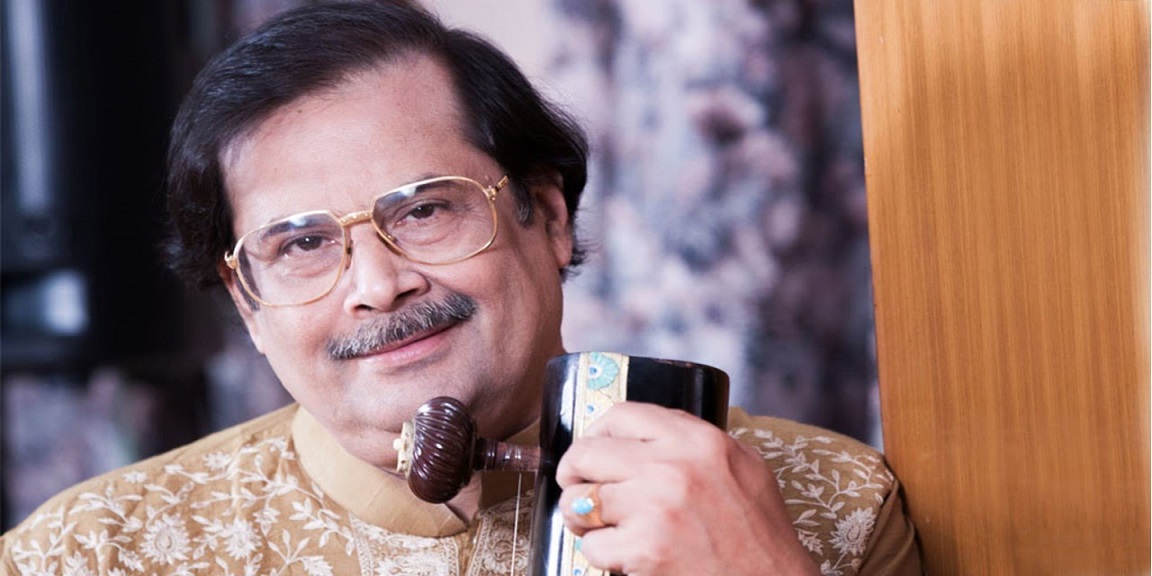
Born on 25 December 1952 in Kolkata, West Bengal, Pandit Ajoy Chakrabarty is today poised as a cult figure among all legendary Indian Classical Vocalists. A Hindustani classical vocalist, composer, lyricist, and exponent of the Patiala-Kasur Gharana, his journey from Kolkata to Carnegie Hall is a story of lifelong devotion to music.
"Music is a way of connecting with the divine — it is the language of the soul."
He can equally portray the most subtle features of major gharanas — Indore, Delhi, Jaipur, Gwalior, Agra, Kirana, Rampur — and even the Carnatic music of South India. This mastery springs from his wide exposure to diverse maestros and musicologists alongside his foundational gurus.
His father, late Shri Ajit Kumar Chakraborty, was his first guru. He then studied under Shri Pannalal Samanta, Shri Kanaidas Bairagi, and ultimately the legendary Padmabhushan Pandit Jnan Prakash Ghosh. His training was further deepened under Ustad Munawar Ali Khan, son of the great Ustad Bade Ghulam Ali Khan.
He graduated top of his class in both B.A. and M.A. in Music from Rabindra Bharati University in Kolkata, and in 1978 joined the ITC Sangeet Research Academy as its first scholar — becoming one of its youngest gurus.
Panditji has graced the world's foremost stages: Carnegie Hall, The Kennedy Center, Royal Albert Hall, Queen Elizabeth Hall, and the Jazz Preservation Hall in New Orleans — where he was awarded honorary citizenship for his historic performance with jazz musicians, a unique East-West cultural milestone.
He is the first Indian classical vocalist invited by both Pakistan and China, and by the BBC for their Golden Jubilee Celebration of India's Independence. With over 100 albums published across India, the USA, UK, Canada, Holland, and Germany, his discography spans pure classical Khyal, Thumri, Tappa, Bhajan, Kirtan, and film music across multiple languages.
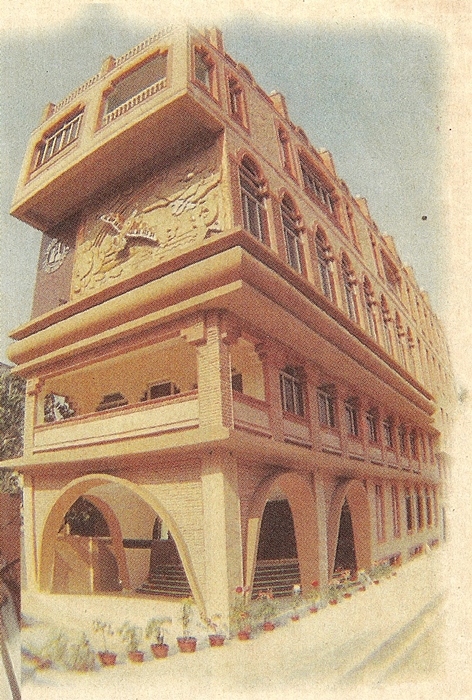
Driven by the vision of his Guru Jnan Prakash Ghosh, Panditji founded Shrutinandan in 1993 — a revolutionary, scientific approach to teaching Indian music that has since reached the USA, UK, and beyond. His teaching methodology, refined over decades with his daughter Kaushiki as the model student, is considered the first truly scientific approach to Indian vocal music training.